
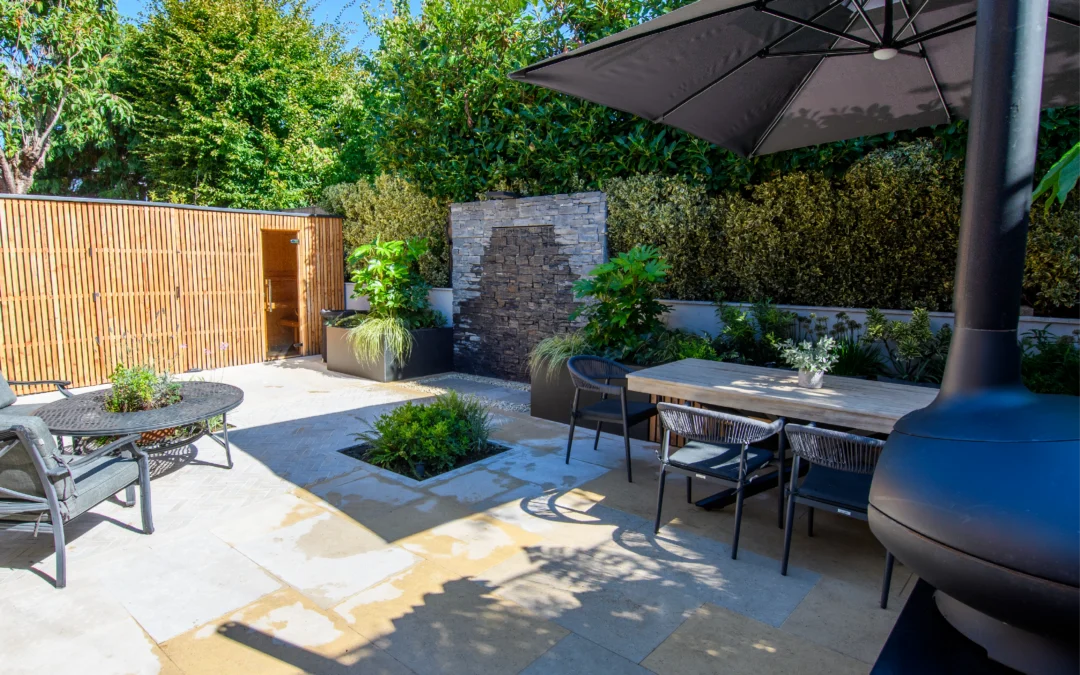
If you’re in Surrey this August, you’ll already know the garden is looking a little stressed.
We’re currently in the middle of a second consecutive summer drought, and with an active hosepipe ban across Surrey and much of the south east, a lot of homeowners are watching their gardens struggle and wondering what on earth to do about it. It’s not a great feeling, particularly if you take pride in your outdoor space.
The honest answer is: there’s a lot you can do. Some of it is immediate. Some of it is about making smarter long-term decisions so that next summer, and the ones after that, your garden is built effectively to handle this.
At Laurel Hill Gardens, we install irrigation systems in the majority of our garden projects. A controlled drip hose system is permitted even during a hosepipe ban, as it counts as a managed water system rather than a handheld hosepipe, meaning your plants continue to receive exactly the water they need to establish, delivered directly to the root zone in a controlled and efficient way.
Right Now: How to Protect Your Garden During the Hosepipe Ban
First, the practical stuff. Watering cans and buckets are still permitted under the current restrictions, so hand watering is very much allowed. It just requires a bit more thought about where that water goes.
Prioritise what actually needs water. Established trees, shrubs and perennials are far more resilient than they look. They have deep root systems and can handle dry spells better than recently planted specimens or anything in containers. Focus your watering on new planting, pots and anything that’s visibly really struggling rather than watering everything equally.
Water in the evening. Early morning is ideal, but evening is far better than midday. Water applied during the heat of the day evaporates before it reaches the roots. Evening watering gives moisture the chance to penetrate properly overnight.
Mulch everything you can. A thick layer of mulch, (bark, gravel, compost) around your planting retains soil moisture significantly. Spring and autumn are the ideal times to mulch properly, but if you haven’t done it yet this year, applying it now will still make a measurable difference through the rest of the summer.
Leave the lawn. Grass goes brown in drought. It looks awful but it recovers… it always does. Don’t waste precious water on it right now. It will come back.
The Bigger Conversation: Right Plant, Right Place
This summer is a reminder of something that garden designers have always known: the single most important decision you make in a garden is what you plant and where.
A garden full of moisture-hungry plants in free-draining Surrey soil was always going to struggle in a dry summer. A garden planted with species that are suited to the conditions, the soil, the aspect, the local climate, will look after itself far more readily.
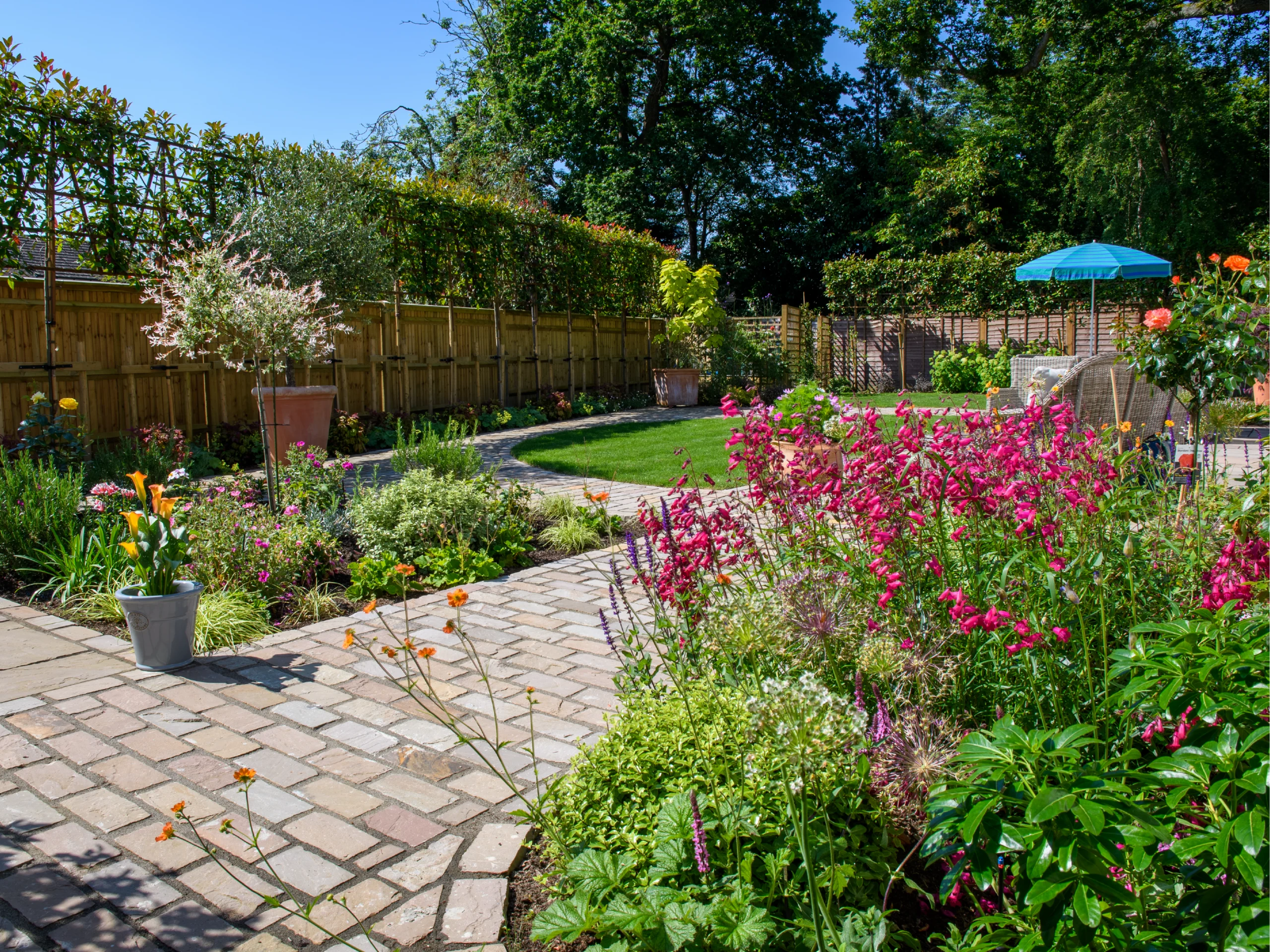
The Surrey Hills and much of the surrounding area has naturally well-draining, sandy soil in many places, ideal for a whole range of beautiful drought-tolerant plants. Mediterranean species like lavender, rosemary, cistus, salvias and ornamental grasses. Hardy perennials like echinacea, rudbeckia and verbena bonariensis. Structural plants like olive trees and architectural grasses that look stunning and ask for very little once established. That said, large parts of Surrey also sit on heavy clay, which retains moisture better during dry spells but cracks and compacts in prolonged heat. On clay, the priority is choosing robust plants that handle both wet winters and dry summers (hardy geraniums, salvias, rudbeckia and ornamental grasses all perform reliably in these conditions).
If your current planting scheme is struggling every dry summer, it may simply not be right for your site. Replanting with species that suit your conditions isn’t a compromise, it’s how you get a garden that looks good with far less intervention.
Drip Irrigation: The Smarter Way to Water Your Garden
For gardeners who want to water efficiently and precisely, whether now or in future seasons, drip irrigation is well worth considering as part of a wider garden design.
Unlike sprinklers or hosepipes, drip irrigation delivers water directly to the root zone of individual plants, where it’s actually needed. It reduces water use significantly compared to conventional watering while keeping plants in better condition. And crucially, it’s not affected by hosepipe bans in the same way, as systems installed as permanent garden infrastructure are treated differently to handheld hosepipe use.
Specified and installed at the design stage, a drip irrigation system works hand in hand with a drought-tolerant planting plan to create a garden that’s resilient, beautiful in a good summer and capable of looking after itself in a difficult one.
Planning Ahead: What This Summer Is Telling You
If your garden is really struggling right now, it’s worth treating this as information rather than just bad luck. The question to sit with is: what would make this garden more resilient?
Sometimes the answer is a few targeted replanting decisions like swapping out moisture-hungry species for drought-tolerant alternatives in the spots that are really suffering. Sometimes it’s a more fundamental rethink of the planting plan. And sometimes it’s the moment to have a broader conversation about what you actually want from your garden and how to design it to deliver that in all conditions.
If this summer has brought any of those questions to the surface, we’d love to talk. Get in touch for a free initial consultation, just a relaxed conversation about your garden, what’s working, what isn’t, and what could be done differently.
Recent Comments